


Every team wants to move fast. Launch the update, ship the feature, roll out the campaign. Testing often feels like a speed bump on that road, something you will “get to later” if the results aren’t great.
But skipping user testing rarely saves time. It just shifts the work to a more expensive stage when your product is already live.
At Useberry, we’ve seen how powerful it can be when teams make testing part of their rhythm from the start. When user testing becomes routine, it brings clarity to decisions and confidence to launches. The real cost of building without it isn’t just measured in budget or hours. It shows up in rework, frustration, and missed opportunities.
The Myth of “We’ll Fix It Later”
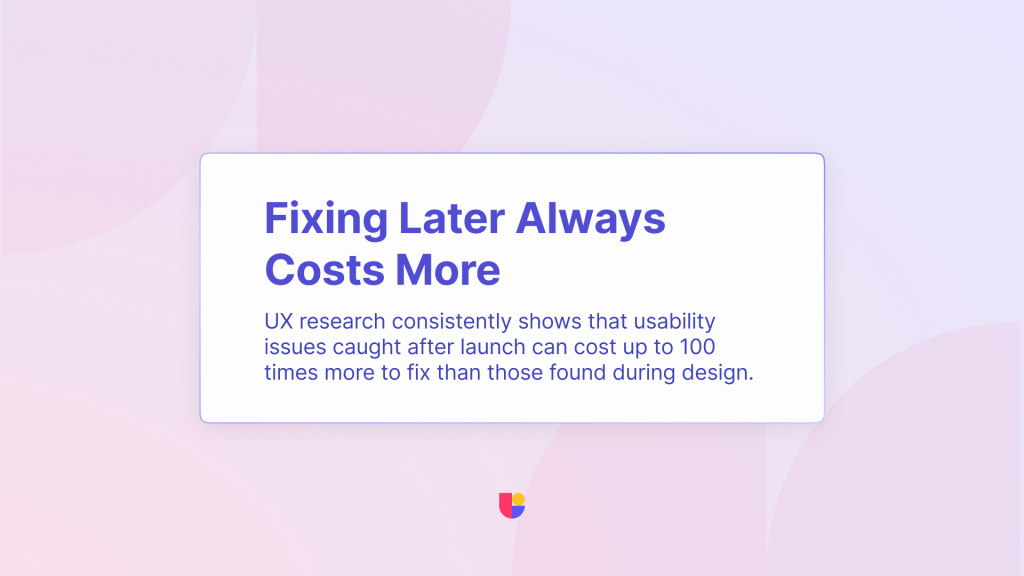
There’s a familiar optimism that shows up in many product discussions: “Let’s launch it and see how it performs.” It sounds agile and efficient, but when testing is replaced by post-launch observation, learning happens too late in production, with real users, on expended budgets. In fact, research from UXPA finds that once a product has launched, correcting usability issues can cost 10 to 100 times more than catching them during design.
Fixing something after launch is like renovating a house after people move in. You have to coordinate around what’s already built, and inconvenience the occupants. Every change disrupts something else, and every delay affects another team: marketing, support, even finance.
This rework is not a single “cost.” It appears as extra meetings, feature freezes, late-night fixes and delayed roadmaps. The more time you spent going back to “fix” something that wasn’t built on feedback during development, the less time you have for future updates. In fact, the research mentioned above finds that once a product has launched, correcting usability issues can cost 10 to 100 times more than catching them during design.
When “No Time for Testing” Becomes Months of Rework
Picture a team working on a new signup flow. The design looks clean, the copy feels sharp, and everyone agrees it’s an improvement. The only thing missing from the release plan is user testing.
The flow goes live and, at first, everything seems fine. But soon, support tickets start trickling in. Users are dropping off midway. Some can’t find the next step, others think the process has ended when it hasn’t.
Now the team is trying to fix things after they are live, revising screens, and realigning copy to fix what could have been caught with a short usability test. What was meant to save time ends up taking weeks of rework and lost confidence. Some of those users who had bad experiences are never coming back, first impressions matter.
Situations like this happen across every industry. Skipping testing doesn’t eliminate work; it only postpones it until the cost is harder to control. That’s why recognizing the importance of user testing early in your process saves more than just resources, it saves momentum.
The Ripple Effect Beyond Design
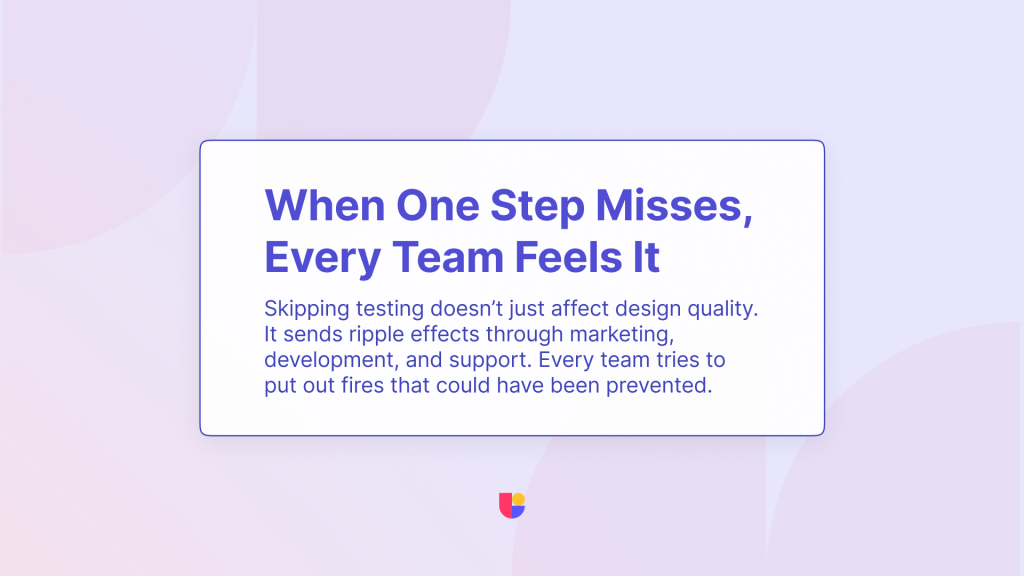
The cost of not testing doesn’t stay within the design team. It ripples through every department:
- Marketing ends up promoting something that doesn’t fully meet user expectations.
- Customer support gets buried in calls and questions that could have been avoided.
- Development spends cycles addressing usability flaws instead of moving on to the next update.
When testing is skipped, each team fills the gaps with assumptions. Misalignment grows quietly until results start slipping.
People Can’t Support What They Don’t Understand
One of the biggest hidden costs of skipping testing is a lack of shared understanding. Stakeholders want to make the right calls, but they can’t champion what they haven’t seen. A five-minute user recording often convinces more people than a 20-page report. It shows real behavior instead of assumptions. When teams share assumptions, conversations turn into debates. When they share evidence, conversations move toward action.
How to Make the Hidden Costs Visible
If you’re part of a design or research team trying to build testing habits, the best way to get buy-in is to frame it around risk and impact. Stakeholders don’t need research jargon; they need to understand what testing prevents. Here are a few simple ways to make that connection clear:
- Show examples, not slides. Share a Highlight Reel of where users hesitate or get confused. It tells the story instantly.
- Translate feedback into outcomes. Replace “usability issue” with “potential 20% drop in signups.”
- Compare testing time with rework time. A few remote sessions often save entire sprints.
- Connect insights to business goals. Whether it’s conversions, retention, or satisfaction, tie results to outcomes leadership already tracks.
Explaining testing in business terms turns confusion into commitment and helps secure support from other teams. For ideas on how teams outside UX can apply that thinking, see our post – “How to Turn User Testing Insights into Marketing Wins”.
The Real Price Tag of a Missed Insight
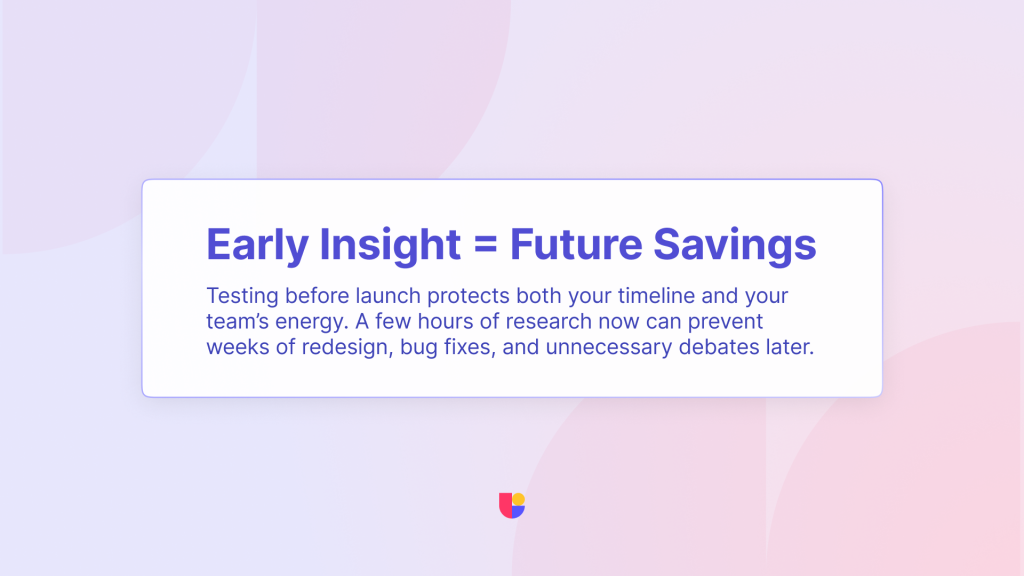
Not testing is like skipping a pilot episode and releasing a full season. You don’t know what works until the feedback comes in, and by then, changing direction takes more time and money than a small pre-launch test ever would.
The irony is that user testing has never been easier or faster. With Useberry, teams can run remote unmoderated studies in hours with the exact audience they need. That flexibility isn’t a luxury anymore. it’s how you keep development and decision-making in sync with design.
Closing Thought
The hidden cost of not testing isn’t just financial. It’s emotional and cultural. It shows up in long feedback loops, unclear goals, and team burnout. Recognizing the importance of user testing means treating it as part of how you work, not something extra. Testing gives your ideas proof, your team confidence, and your users clarity.
It’s the one investment that pays off before, during, and after every release.
Ready to See the Real Value of Testing?
Run a quick study with Useberry and spot issues before launch.